No products in the cart.

What sport is best for losing weight? | UK Guide

09
May
May
UK Weight Management Guide
What sport is best for losing weight?
Discover which types of sport and exercise can support weight management, how aerobic and resistance training differ, and how to choose an activity you can maintain consistently.
Explore Weight Management Information
What sport is best for losing weight?
There is no single sport that is best for everyone. For many adults, aerobic activities such as brisk walking, cycling, running, swimming and dancing can increase energy expenditure, while resistance exercise can help preserve lean mass during weight loss. The best choice is an activity that is appropriate for your fitness level and that you can perform consistently.
If you are searching for what sport is best for losing weight, the most useful distinction is between the amount of energy an activity uses and whether you can realistically maintain it. Research involving adults with overweight or obesity supports aerobic exercise for reductions in body weight and body fat, while resistance exercise has an important role in maintaining fat-free mass during dietary weight loss.
A large overview of systematic reviews found that exercise produced significant reductions in body weight, fat mass and visceral fat. It also found that resistance training helped reduce lean-mass loss during weight loss. Published evidence on exercise and weight loss provides further detail.
How sport supports weight loss
Weight change is influenced by energy intake, energy expenditure, body composition, sleep, behaviour, medications and other health factors. Sport contributes primarily by increasing physical activity and energy expenditure.
Exercise can also improve cardiovascular fitness, muscle strength and body composition even when the change on the scales is relatively small. For this reason, body weight should not be the only measure used to assess progress.
Consistency matters
A sustainable exercise routine is generally more useful than choosing an activity solely because it has a high theoretical calorie burn.
Beginners can start with manageable sessions and gradually increase duration, frequency or intensity.
What sport is best for losing weight?
The following activities can all form part of an effective weight-management programme. Their suitability depends on fitness, experience, preferences, injury history and medical circumstances.
1. Brisk walking
Walking is accessible, relatively low impact and easy to increase gradually. Brisk walking can raise heart rate and contribute to weekly aerobic activity.
2. Cycling
Cycling provides aerobic exercise while allowing intensity to be adjusted. It can be performed outdoors or using a stationary bike.
3. Running
Running generally requires more energy per minute than walking. However, it has greater impact and may not be appropriate for everyone, particularly beginners or people with certain joint problems.
4. Swimming
Swimming provides aerobic exercise and involves multiple muscle groups. It can be useful for people who prefer water-based exercise.
5. Dancing
Dancing can provide moderate or vigorous aerobic activity depending on the style and intensity. Enjoyment can make regular participation easier.
6. Resistance training
Strength training does not need to produce the largest immediate calorie expenditure to be valuable. Evidence supports its role in preserving fat-free mass and improving strength during weight loss.
Home-friendly exercise
Indoor exercise can be useful when weather, transport or access to facilities makes outdoor sport difficult.
Choose an activity that matches your current ability and increase training gradually rather than attempting a demanding programme immediately.


Dancing counts as physical activity
Dancing can raise heart rate and breathing and therefore contribute to weekly aerobic activity. Its intensity varies considerably between styles and sessions.
Sport comparison for weight management
| Activity | Main benefit | Intensity options | Suitable starting point |
|---|---|---|---|
| Walking | Aerobic activity and accessibility | Low to moderate | Short brisk walks |
| Cycling | Cardiovascular fitness | Moderate to vigorous | Easy cycling or stationary bike |
| Running | High energy expenditure per unit of time | Moderate to vigorous | Walk-run progression |
| Swimming | Aerobic conditioning using multiple muscle groups | Moderate to vigorous | Comfortable continuous swimming |
| Dancing | Enjoyable aerobic activity | Moderate to vigorous | Beginner dance sessions |
| Resistance training | Strength and lean-mass preservation | Moderate to vigorous | Bodyweight or supervised resistance work |
Key research findings and data
Current evidence supports combining aerobic and resistance exercise rather than searching for one universally superior sport.
Aerobic exercise
A recent dose-response meta-analysis included 116 randomised clinical trials involving 6,880 adults with overweight or obesity. Increasing aerobic exercise was associated with reductions in body weight, waist circumference and body fat. The analysis reported a progressive relationship with increasing exercise duration, with clinically important changes in waist circumference and body fat becoming more evident around 150 minutes per week at moderate-to-vigorous intensity.
Read the peer-reviewed aerobic exercise meta-analysis .
Resistance training
Resistance exercise has a different role. A 2025 systematic review and meta-analysis found that adding resistance exercise during dietary weight loss helped protect fat-free mass, increased fat-mass loss and improved muscular strength.
Read the peer-reviewed resistance-training review .
Important: Research results describe groups of study
participants and should not be interpreted as a guaranteed amount of
weight loss for an individual.
A practical weekly approach
UK physical-activity guidance recommends adults work towards at least 150 minutes of moderate-intensity activity each week, or 75 minutes of vigorous activity, together with muscle-strengthening activity on at least two days.
| Day | Example activity |
|---|---|
| Monday | 30-minute brisk walk |
| Tuesday | Resistance training |
| Wednesday | 30-minute cycling session |
| Thursday | Rest or light activity |
| Friday | 30-minute brisk walk or dance session |
| Saturday | Resistance training plus light activity |
| Sunday | 30-minute swimming, walking or cycling |
This is an example rather than an individual medical exercise prescription. Someone who has been inactive should build activity gradually.
Exercise and medical weight management
Exercise is one component of weight management. Some people with overweight or obesity may also discuss structured dietary programmes, behavioural support or prescription treatment with an appropriately qualified healthcare professional.
Prescription medicines used for weight management should not be viewed as substitutes for professional assessment, nutrition, physical activity or appropriate follow-up. Suitability depends on the individual’s medical history, current medicines, eligibility criteria and the licensed indication.
Some medicines that affect metabolic pathways are supported by clinical trials, while other compounds remain investigational. For example, retatrutide has been studied as an investigational multi-receptor agonist; investigational status means that trial findings should not be presented as proof that an unlicensed product is safe or appropriate for routine consumer use.
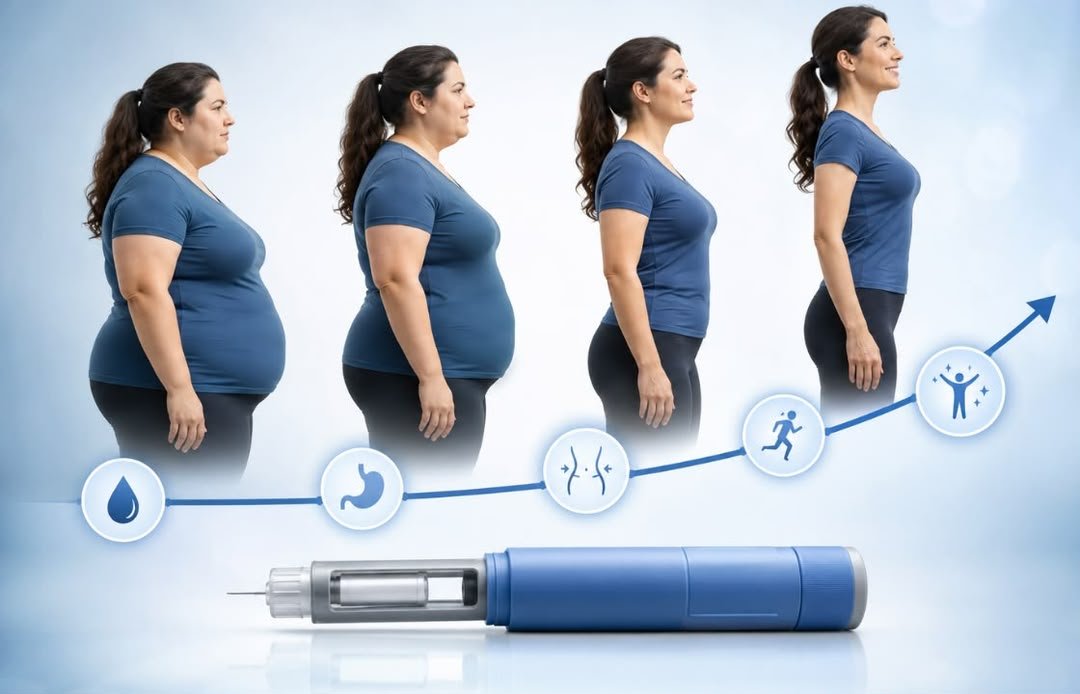
UK regulatory note: Prescription-only medicines cannot
be advertised to the general public in the UK. Public-facing weight-loss
content should therefore avoid presenting prescription medicines as
products available for direct purchase or using indirect promotional
signals such as injection-pen imagery to encourage a purchase.
Direct FAQs: What sport is best for losing weight?
What sport is best for losing weight?
There is no single sport that is best for everyone. Brisk walking, cycling, running, swimming and dancing can all provide useful aerobic activity, while resistance training can help preserve lean mass during weight loss.
Is running better than walking for weight loss?
Running generally uses more energy per minute than walking, but walking can be easier to sustain and may be more appropriate for beginners. The appropriate choice depends on fitness, joints, experience and consistency.
Is cycling good for losing weight?
Yes. Cycling is an aerobic activity that can increase energy expenditure and improve cardiovascular fitness. Intensity and duration can be adjusted as fitness improves.
Can swimming help with weight loss?
Yes. Swimming can contribute to weight management through aerobic exercise and whole-body muscular activity. Results depend on frequency, duration, intensity and overall energy balance.
Is dancing good exercise for weight loss?
Dancing can be effective aerobic exercise when performed at an intensity that raises heart rate and breathing. It can also be easier to maintain when the activity is enjoyable.
Should I do strength training when trying to lose weight?
Strength training can be valuable during weight loss because research indicates that resistance exercise helps preserve fat-free mass and improve strength.
How much exercise should I do each week?
UK guidance recommends working towards at least 150 minutes of moderate-intensity activity weekly, or 75 minutes of vigorous activity, plus muscle-strengthening activity on at least two days.
Bottom line
If you are asking what sport is best for losing weight, the evidence points away from a single universal winner. Aerobic exercise is useful for increasing energy expenditure and reducing body fat, while resistance training has an important role in maintaining lean mass and strength.
For many people, the most practical strategy is a combination of sustainable aerobic activity and regular resistance training. Start at a manageable level, increase activity gradually and choose activities you can continue over time.
