No products in the cart.

Retatrutide Pen Where to Buy

02
Nov
Nov
Retatrutide Pen Where to Buy in the UK: Safety & Research Guide
Understand the UK availability of retatrutide, how it compares with tirzepatide, what clinical trials have established, and why product verification matters.
Where Can You Buy a Retatrutide Pen in the UK?
Searching for “retatrutide pen where to buy”? As of November 2026, retatrutide remains an investigational medicine and is not an authorised treatment available through ordinary UK prescribing. Legitimate patient access is generally limited to participation in approved clinical trials.
Retatrutide is being studied as a triple-receptor agonist targeting GLP-1, GIP and glucagon receptors. Its development has attracted attention because clinical trials have reported substantial changes in body weight and metabolic measurements.
However, published trial outcomes do not establish that a product advertised online contains authentic retatrutide, has appropriate pharmaceutical quality, or is safe for self-administration.
Important UK safety information: Products described as research peptides must not be assumed to be licensed medicines. A laboratory-use label does not establish suitability for human injection, and a 40 mg pen listing is not equivalent to an approved clinical-trial formulation.
Peer-reviewed evidence includes the Phase 2 retatrutide obesity trial, which assessed weight changes and adverse events in a controlled clinical setting.
How Does Retatrutide Work?
Retatrutide is a synthetic peptide designed to activate three hormone receptors involved in metabolic regulation: GLP-1, GIP and glucagon.
GLP-1 receptor activation is associated with appetite regulation, glucose-dependent insulin secretion and slower gastric emptying. GIP receptor activity contributes to glucose-dependent metabolic signalling. Glucagon receptor activation is being investigated for its effects on energy expenditure and nutrient metabolism.
The combination is intended to influence several metabolic pathways simultaneously. Researchers are evaluating whether this mechanism offers clinically meaningful benefits beyond established treatments.
Although the mechanism is scientifically promising, receptor activity alone does not prove long-term safety, suitability for an individual patient or superiority over other medicines.

Retatrutide vs Tirzepatide: What Is the Difference?
Retatrutide and tirzepatide are related but distinct compounds. The primary difference is their receptor activity and regulatory status.
| Feature | Retatrutide | Tirzepatide |
|---|---|---|
| Mechanism | Triple agonist | Dual agonist |
| Receptors | GLP-1, GIP, glucagon | GLP-1, GIP |
| UK medicine status | Investigational | Authorised for specified indications |
| Clinical evidence | Phase 2 and Phase 3 studies | Large Phase 3 programme and clinical use |
| Routine UK prescription | Not available | Available subject to eligibility |
| Long-term evidence | Still developing | More established |
These differences are important for anyone comparing weight-management treatments. An investigational molecule cannot be treated as a direct substitute for an authorised prescription medicine.
Trial percentages also should not be compared without considering the study populations, treatment durations, doses, endpoints and statistical methods. A direct head-to-head trial would provide stronger comparative evidence.
Why Are Triple-Agonist Peptides Being Studied?
Obesity is a complex chronic condition influenced by appetite, energy balance, metabolic adaptation and numerous biological and environmental factors.
Investigators are studying whether targeting multiple hormone receptors can improve metabolic outcomes in selected populations.
Research questions include the durability of weight reduction, changes in glycaemic measurements, effects on cardiovascular risk factors, tolerability and the consequences of long-term treatment.
Successful results in controlled studies can support regulatory applications, but do not automatically make a treatment available to the general public.
Key Clinical Research Findings and Data
Clinical trials provide more reliable evidence than testimonials, unverified online reviews or before-and-after photographs. The following findings come from published studies and should be interpreted within their respective trial designs.
24.2%Mean weight reduction at 48 weeks in the 12 mg Phase 2 retatrutide group
28.3%Mean weight reduction at 80 weeks in the 12 mg Phase 3 retatrutide group
20.9%Mean weight reduction at 72 weeks in the 15 mg tirzepatide group
Retatrutide Phase 2 Evidence
A randomized Phase 2 study involving 338 adults assessed retatrutide over 48 weeks. The 12 mg group experienced an estimated mean body-weight reduction of 24.2%, compared with 2.1% in the placebo group.
Researchers also observed improvements in selected cardiometabolic measurements. Gastrointestinal adverse events were common, and heart-rate increases were reported. The findings supported further research rather than establishing routine clinical approval.
Retatrutide Phase 3 Evidence
Results from the TRIUMPH-1 Phase 3 programme, published in September 2026, provided further evidence in adults with obesity without diabetes. The 12 mg group achieved an average weight reduction of approximately 28.3% over 80 weeks.
This represents a substantial trial observation, but individual results vary. Researchers and regulators must consider the full evidence on adverse events, treatment discontinuation and longer-term safety.
Read the peer-reviewed Phase 3 publication.
Tirzepatide Clinical Evidence
The SURMOUNT-1 trial studied tirzepatide in adults with obesity or overweight without diabetes. At 72 weeks, the 15 mg group experienced a mean body-weight reduction of 20.9%, compared with 3.1% in the placebo group.
The study demonstrated clinically meaningful changes in body weight, but the findings should not be interpreted as a direct comparison with retatrutide because the trials differed.
See the published SURMOUNT-1 trial.
Retatrutide and Tirzepatide Research Product Information
Research catalogue listings may describe peptide concentration, total labelled content, packaging and intended laboratory use. These details are relevant to product identification, but they do not demonstrate pharmaceutical approval or clinical suitability.

Retatrutide 40mg Research Pen Kit
An investigational triple-agonist peptide listing. Product identity, analytical documentation and research-use restrictions require independent verification.
View research product information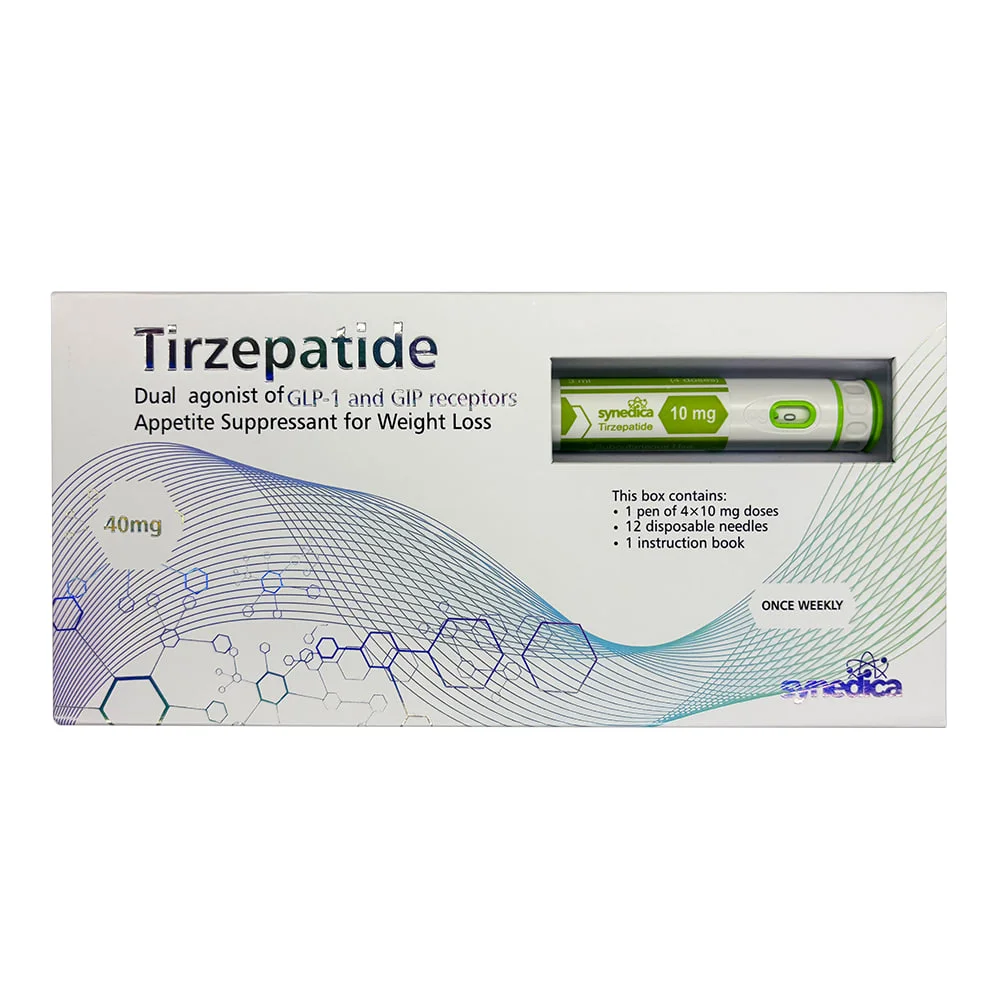
Tirzepatide 40mg Research Pen Kit
A dual GIP and GLP-1 receptor agonist listing. An online research pen must not be assumed equivalent to a licensed UK prescription formulation.
View research product informationThe research products shown above are not presented as authorised medicines. Do not use an unverified research preparation for human administration.
Safety, Side Effects and Clinical Limitations
Clinical research has reported gastrointestinal effects including nausea, vomiting, diarrhoea and constipation. The frequency and severity of adverse events may depend on the study protocol and treatment group.
Other considerations include changes in heart rate, dehydration associated with persistent gastrointestinal symptoms, and potential interactions or complications in people with existing medical conditions.
Published trials involve eligibility screening, controlled formulations, scheduled monitoring and adverse-event reporting. These safeguards are not established merely because an online seller advertises a product as laboratory grade.
Longer-term safety questions remain particularly relevant to investigational medicines. Clinical decisions should be based on approved prescribing information and professional assessment rather than social-media recommendations.


Pregnancy, Breastfeeding and Postpartum Considerations
Weight-management medicines require particular caution during pregnancy, breastfeeding and the postpartum period.
There is insufficient evidence to establish retatrutide safety in these populations. Investigational trial findings from other adult populations cannot be assumed to apply to pregnancy or breastfeeding.
People planning pregnancy, currently pregnant or breastfeeding should seek individual advice from an appropriately qualified clinician before considering any weight-management medicine.
Online research preparations should never be treated as substitutes for regulated clinical care.
How to Verify Legitimate UK Access and Product Information
People asking where to buy a retatrutide pen should first distinguish clinical-trial participation from ordinary commercial listings. A website’s use of scientific terminology does not establish that a product is authorised for human treatment.
Questions to Ask Before Trusting a Listing
- Regulatory status: Is the product actually authorised as a medicine for the stated indication?
- Intended use: Is it explicitly restricted to laboratory research, or is the seller making unsupported therapeutic claims?
- Product identity: Are manufacturing details, batch identification and independent analytical evidence available?
- Quality controls: Is there reliable evidence of appropriate purity, sterility and quality assurance?
- Medical supervision: Is treatment being provided through a legitimate clinical pathway with appropriate assessment and monitoring?
A certificate of analysis can provide useful information about a tested sample, but it does not independently prove sterility, regulatory approval or clinical safety. Packaging photographs and customer reviews are likewise insufficient evidence.
For approved weight-management treatment, consult a qualified UK prescriber or registered pharmacy. For investigational medicines, explore formally registered clinical trials and their eligibility requirements.
Frequently Asked Questions About Retatrutide Pens in the UK
Where can I buy a retatrutide pen in the UK?
Retatrutide is not an authorised UK prescription medicine as of November 2026. People interested in access should investigate legitimate clinical trials rather than purchasing unverified injection products for personal use.
Is retatrutide available on prescription in the UK?
No. Retatrutide remains investigational and is not available through routine UK prescribing. Published Phase 3 results do not themselves constitute marketing authorisation.
What is the difference between retatrutide and tirzepatide?
Retatrutide activates GLP-1, GIP and glucagon receptors, whereas tirzepatide activates GLP-1 and GIP receptors. Tirzepatide has authorised medical uses in the UK; retatrutide remains under investigation.
How much weight loss was observed in retatrutide trials?
One Phase 2 study reported a mean reduction of 24.2% at 48 weeks in its 12 mg group. A subsequent Phase 3 trial reported approximately 28.3% at 80 weeks in its 12 mg group; these are trial averages, not individual predictions.
Is a 40mg research pen the same as a clinical-trial medicine?
No. A commercial product labelled 40 mg is not automatically equivalent to the formulation, manufacturing controls or dosing protocol used in clinical trials. Total labelled content should not be confused with an approved treatment dose.
What are the common side effects of retatrutide?
Clinical studies have commonly reported nausea, diarrhoea, vomiting and constipation. Heart-rate changes and other safety findings are also being evaluated as research continues.
Can retatrutide be used during pregnancy or breastfeeding?
Its safety during pregnancy and breastfeeding has not been established. People in these circumstances should seek professional medical advice and avoid investigational preparations outside appropriate clinical research.
When will retatrutide become available in the UK?
There is no confirmed date for routine UK availability. Any future access depends on regulatory review, approval, supply arrangements and the clinical indications ultimately authorised.
Explore More Retatrutide Research
Discover how retatrutide peptide works and explore our detailed comparison of retatrutide vs tirzepatide to understand their receptor activity, clinical research and key differences.
