No products in the cart.

synedica tirzepatide 40mg

06
Mar
Mar
UK Peptide Research Guide
Synedica Tirzepatide 40mg: UK Research, Evidence & Safety Guide
Understand the science behind tirzepatide, published weight-management research, UK regulatory considerations and how it differs from investigational retatrutide.
Synedica tirzepatide 40mg is a product listing associated with tirzepatide, a peptide that activates glucose-dependent insulinotropic polypeptide (GIP) and glucagon-like peptide-1 (GLP-1) receptors. Tirzepatide has been studied extensively for weight management and type 2 diabetes. However, evidence from authorised medicines cannot automatically establish the safety, quality or effectiveness of a separately marketed 40mg research pen kit.
For UK readers, the distinction between a licensed prescription medicine and a research-labelled product is essential. This guide explains the scientific evidence, trial findings, receptor mechanisms, product-label terminology and important safety considerations.
Important UK safety information:
Tirzepatide medicines for human treatment require appropriate
prescribing and regulated supply. A research-labelled injection
kit is not automatically a licensed medicine. Retatrutide
remains investigational and is not authorised for UK clinical use.
This article does not recommend self-administration of
research peptides.
What Is Tirzepatide?
Tirzepatide is a synthetic peptide with dual activity at the GIP and GLP-1 receptors. These hormone pathways are involved in insulin secretion, glucose regulation, appetite signalling and energy balance.
In clinical trials, pharmaceutical-grade tirzepatide produced significant changes in body weight and several metabolic measures. These findings led to its development as a prescription medicine for defined patient populations.
Why are researchers interested in tirzepatide?
Its dual-receptor activity provides a way to study interactions between two important metabolic hormone systems.
Researchers investigate appetite regulation, glucose-dependent insulin responses, gastrointestinal effects and long-term metabolic outcomes.
The scientific evidence concerns defined trial formulations, doses and monitoring protocols. It should not be generalised to independently marketed products without supporting quality and equivalence data.

Synedica Tirzepatide 40mg: Product Information
The phrase synedica tirzepatide 40mg identifies a specific research-product listing. The stated 40mg quantity should not be interpreted as an authorised weekly dose, recommended treatment regimen or proof of pharmaceutical equivalence.

Tirzepatide 40mg Research Kit
Product listing reference. Regulatory status, testing documentation and composition require independent verification.
View product information
Retatrutide 40mg Research Reference
Investigational triple-receptor agonist. Not authorised as a medicine for UK patients.
Shown for scientific comparison only.
Before interpreting any research-product specification, it is necessary to establish its identity, concentration, analytical purity, storage conditions and intended laboratory application. A package photograph or product name alone cannot verify these characteristics.
How Does Tirzepatide Work?
Tirzepatide activates two incretin-related receptors. Its effects on glucose regulation and appetite-related pathways are connected to its interactions with GIP and GLP-1 signalling.

GLP-1 receptor activity
GLP-1 receptor activation supports glucose-dependent insulin secretion, influences appetite pathways and can slow gastric emptying.
GIP receptor activity
GIP is another incretin hormone involved in nutrient-responsive insulin secretion and metabolic signalling.
The combined receptor activity is a defining feature of tirzepatide. It is distinct from a GLP-1-only medicine and from a triple-receptor investigational peptide.
Key Tirzepatide Clinical Research Findings
One major source of evidence is SURMOUNT-1, a phase 3 randomised trial involving 2,539 adults with obesity or overweight and a weight-related complication, without diabetes.
After 72 weeks, mean weight changes in the treatment-regimen analysis were approximately 15.0%, 19.5% and 20.9% reductions in the 5mg, 10mg and 15mg tirzepatide groups, compared with 3.1% in the placebo group.
| Trial group | Mean weight change | Study duration |
|---|---|---|
| Tirzepatide 5mg | -15.0% | 72 weeks |
| Tirzepatide 10mg | -19.5% | 72 weeks |
| Tirzepatide 15mg | -20.9% | 72 weeks |
| Placebo | -3.1% | 72 weeks |
Interpretation: These results describe average outcomes in a controlled clinical trial, not guaranteed individual outcomes. The studied regimens are not equivalent to a product labelled 40mg.
Common adverse events in the trial were gastrointestinal, including nausea, diarrhoea and vomiting. Medical assessment and appropriate monitoring remain important when authorised tirzepatide medicines are prescribed.
Read the peer-reviewed SURMOUNT-1 clinical trial publication .
Tirzepatide vs Retatrutide: What Is the Difference?
The central difference is receptor activity. Tirzepatide targets two receptors, while retatrutide targets three: GIP, GLP-1 and glucagon.
Understanding triple-receptor research
Retatrutide adds glucagon receptor agonism to GIP and GLP-1 receptor activity. Researchers are investigating whether this combination influences energy balance, metabolic regulation and body-weight outcomes.
In a published phase 2 study, the retatrutide 12mg group experienced a mean body-weight reduction of 24.2% after 48 weeks, compared with 2.1% in the placebo group.
These findings are promising scientifically, but they do not establish that retatrutide is authorised, appropriate or safe for unsupervised human use.

| Feature | Tirzepatide | Retatrutide |
|---|---|---|
| Receptor activity | GIP and GLP-1 | GIP, GLP-1 and glucagon |
| Classification | Dual agonist | Triple agonist |
| UK medicine status | Authorised prescription formulations exist | Not authorised for clinical use |
| Research evidence | Extensive phase 3 clinical evidence | Published phase 2 and ongoing development evidence |
| Research product equivalence | Cannot be assumed | Cannot be assumed |
Comparing percentages from separate clinical trials does not prove one molecule is superior. Trial populations, treatment durations, protocols and statistical methods may differ.
Read the peer-reviewed retatrutide phase 2 study .
UK Regulation, Prescription Status and Patient Safety
In the United Kingdom, tirzepatide is available in authorised prescription formulations for specified indications. Prescribing decisions depend on the medicine’s approved product information and an individual clinical assessment.
A research-labelled peptide product is not automatically covered by the authorisation of another manufacturer’s prescription medicine, even when the same active ingredient name appears on the label.
What should UK readers understand?
- Licensed medicines undergo regulatory assessment of quality, safety and efficacy.
- Research-only products must not be assumed suitable for human injection.
- A stated milligram quantity does not establish an appropriate treatment dose.
- Product authenticity and independent analytical documentation matter.
- Retatrutide is not an authorised UK weight-loss medicine.
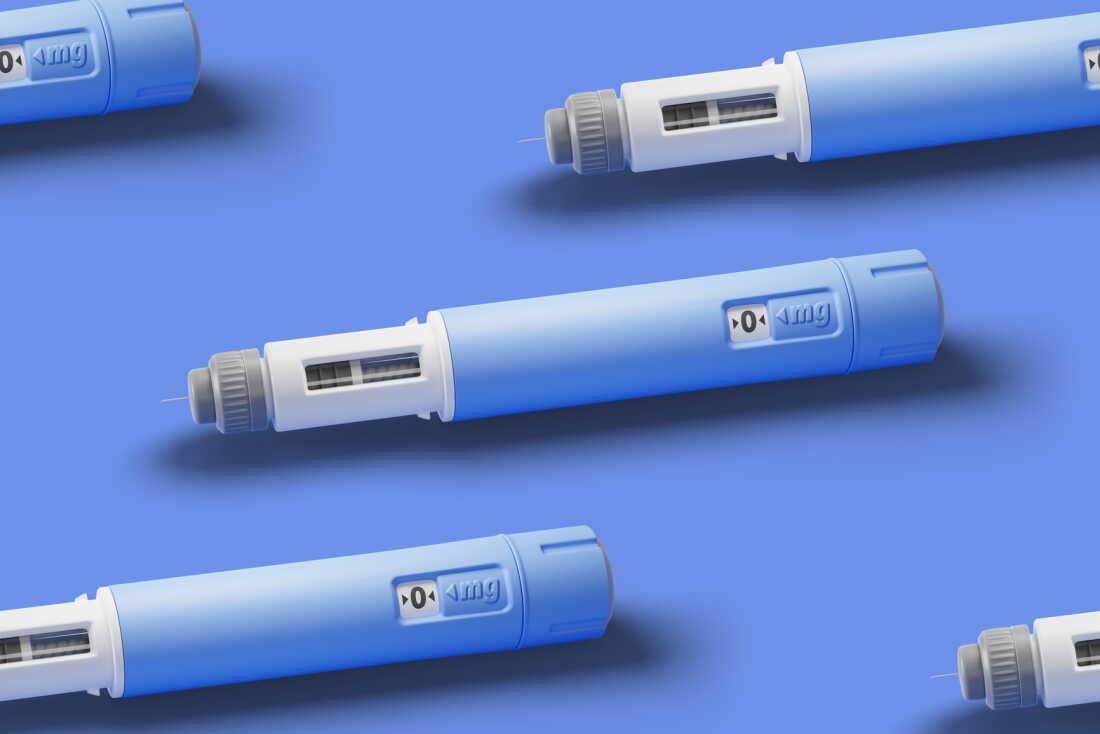
Why product verification matters
Peptide identity, formulation, concentration and contamination risks are especially important where products are presented in injection-ready packaging.
Neither marketing descriptions nor visual similarities establish pharmaceutical manufacturing standards.
Anyone seeking treatment for obesity or diabetes should use an appropriately qualified healthcare professional and a regulated medicine supply route.
For specifications and research-use information, view the Synedica Tirzepatide 40mg product details.
Research Product Quality: What Should Be Documented?
For legitimate analytical or laboratory research, product documentation helps distinguish verified material from unsupported marketing claims.
Identity and analytical purity
Suitable methods may include mass spectrometry and high-performance liquid chromatography. Their interpretation requires validated procedures, appropriate reference standards and traceable samples.
Batch traceability
Documentation should identify the batch, testing date, applicable methods and responsible laboratory. A generic certificate without verifiable batch information provides limited assurance.
Storage and stability
Peptide stability can depend on formulation, temperature, moisture and handling. Storage conditions must be supported by product-specific stability evidence rather than assumed from another formulation.
Sterility and intended use
Analytical purity is not the same as sterility, and neither alone establishes suitability for injection. Human-use medicines require additional controls and regulatory oversight.
For more information about the organisation, visit the Synedica Health About Us page .
Frequently Asked Questions
What is synedica tirzepatide 40mg?
Synedica tirzepatide 40mg is a research-product listing referring to tirzepatide and a stated 40mg quantity. The listing does not itself establish pharmaceutical equivalence, UK authorisation or suitability for human use.
Is tirzepatide legal in the UK?
Authorised tirzepatide medicines are legally available in the UK through appropriate prescription and regulated supply routes. This does not mean every product marketed as tirzepatide is authorised.
Is a 40mg tirzepatide pen an approved weekly dose?
No. A product labelled 40mg should not be interpreted as an approved weekly dose. The amount stated on packaging and the prescribed dose of an authorised medicine are different concepts.
How does tirzepatide support weight management?
Tirzepatide activates GIP and GLP-1 receptors, influencing appetite and glucose-regulating pathways. Clinical trials of authorised pharmaceutical formulations have demonstrated significant average body-weight reductions.
Is retatrutide available as an approved medicine in the UK?
No. Retatrutide remains an investigational compound and is not authorised for routine clinical use in the UK. Published trial results should not be interpreted as permission for unsupervised treatment.
What is the difference between tirzepatide and retatrutide?
Tirzepatide is a dual GIP/GLP-1 receptor agonist. Retatrutide is an investigational triple agonist targeting GIP, GLP-1 and glucagon receptors.
What side effects have been reported with tirzepatide?
Clinical studies commonly report gastrointestinal effects such as nausea, diarrhoea, vomiting and constipation. Other important risks and precautions are described in the approved medicine’s prescribing information.
Can research peptides be used for self-injection?
Research-labelled peptides should not be assumed safe or authorised for self-injection. Human treatment requires an appropriately licensed medicine and professional medical assessment.
Does a certificate of analysis prove a product is safe?
No. A certificate of analysis may provide evidence about selected laboratory measurements, but it does not independently prove sterility, clinical safety or regulatory authorisation.
Where can I find reliable tirzepatide research?
Peer-reviewed clinical publications provide trial methods, outcomes and safety observations. The New England Journal of Medicine includes major studies of tirzepatide and retatrutide.
Scientific References
- Jastreboff AM et al. Tirzepatide Once Weekly for the Treatment of Obesity. New England Journal of Medicine, 2022. Read publication
- Jastreboff AM et al. Triple-Hormone-Receptor Agonist Retatrutide for Obesity: A Phase 2 Trial. New England Journal of Medicine, 2023. Read publication
- Frías JP et al. Tirzepatide versus Semaglutide Once Weekly in Patients with Type 2 Diabetes. New England Journal of Medicine, 2021. Read publication
