No products in the cart.

Reta Peptide: Retatrutide Research & Safety
13
Jun
Jun

EVIDENCE-BASED MEDICAL EDUCATION
Reta Peptide: Retatrutide Research, Weight Loss & Safety
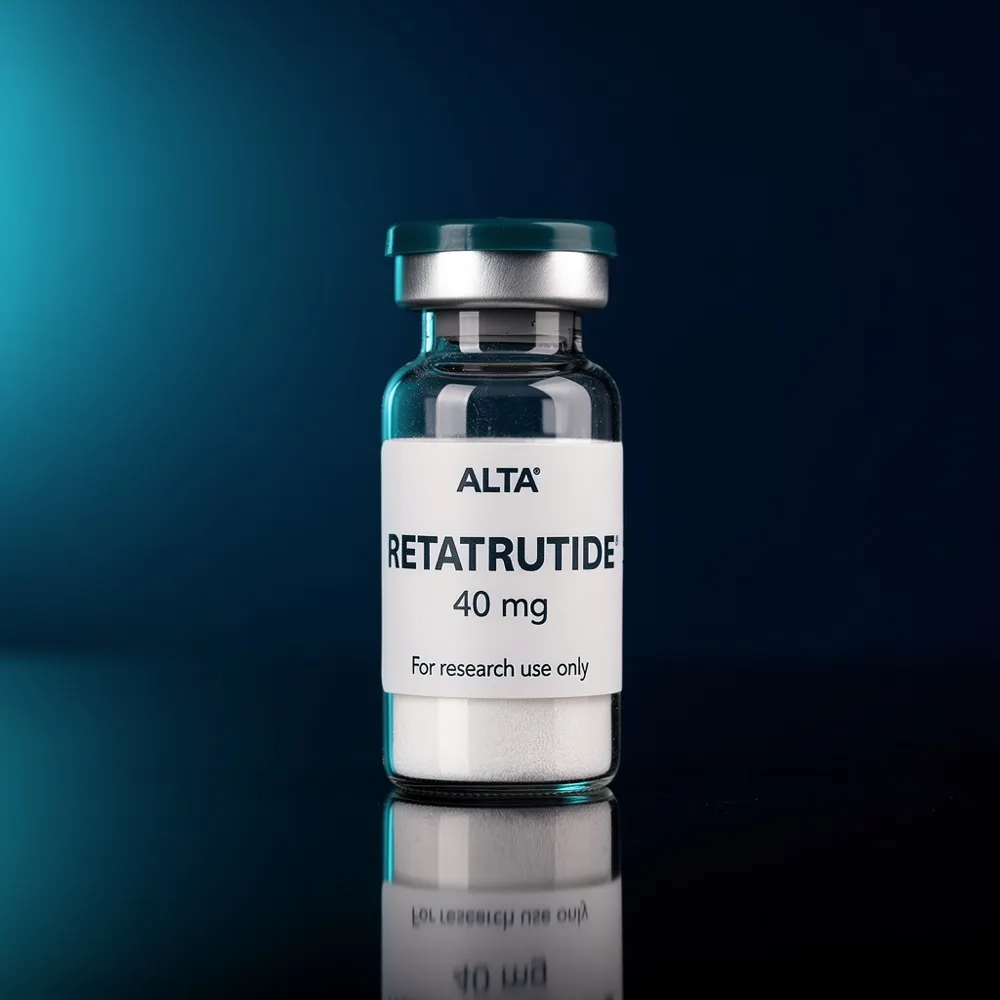
Reta peptide is a commonly searched term for retatrutide, an investigational triple hormone-receptor agonist being studied for obesity, metabolic disease and related conditions.
Explore the ResearchQuick Answer: What Is Reta Peptide?
Reta peptide generally refers to retatrutide, an investigational peptide that activates three hormone receptors: GIP, GLP-1 and glucagon. It is being evaluated in clinical trials for obesity, overweight, type 2 diabetes and several obesity-related conditions.
The term reta peptide has become increasingly prominent in online searches because clinical research has reported substantial changes in body weight and metabolic measurements. However, research results should not be confused with an approved prescription treatment. Retatrutide remains an investigational medicine, and UK regulatory status is separate from clinical-trial results.
In the United Kingdom, the Medicines and Healthcare products Regulatory Agency has stated that retatrutide has not been authorised for use in the UK. Therefore, this article discusses the compound, published evidence, research findings and safety considerations for educational purposes rather than providing a treatment or purchasing guide.
UK regulatory status:
Retatrutide is an investigational medicine and is not currently
authorised for routine use in the UK. Products claiming to contain
retatrutide should not be treated as equivalent to an authorised
prescription medicine.
What Is Reta Peptide?
Reta peptide is an informal search term associated with retatrutide. Scientifically, retatrutide is a single peptide designed to activate the receptors for glucose-dependent insulinotropic polypeptide (GIP), glucagon-like peptide-1 (GLP-1), and glucagon.
Because it acts on three receptor pathways, researchers describe retatrutide as a GIP/GLP-1/glucagon triple agonist. The objective of the research is to determine whether simultaneous activity across these pathways can produce clinically meaningful effects on body weight and metabolic health.

How Reta Peptide Works
The scientific rationale behind reta peptide research is its simultaneous activity at three hormone receptors. These pathways have different physiological roles in appetite regulation, glucose metabolism and energy balance.
01 — GLP-1 receptor
Appetite and glucose signalling
GLP-1 receptor activity is associated with appetite regulation, glucose-dependent insulin secretion and gastrointestinal signalling.
02 — GIP receptor
Metabolic signalling
GIP is an incretin hormone involved in nutrient-related metabolic signalling and insulin responses.
03 — Glucagon receptor
Energy metabolism
Glucagon signalling is involved in glucose regulation and energy metabolism. Researchers are studying how this pathway contributes to the overall effects of retatrutide.

Why Researchers Are Studying Metabolic Pathways
Weight regulation is influenced by appetite signalling, energy expenditure, glucose metabolism, hormonal pathways, sleep, physical activity and many other factors.
Research into reta peptide is therefore focused not simply on calorie reduction, but on how multiple biological pathways can influence body weight and metabolic measurements.
Key Reta Peptide Research Findings & Data
The first major obesity study was a randomised, double-blind, placebo-controlled Phase 2 trial involving 338 adults with obesity or overweight plus a weight-related condition. Participants received different retatrutide doses or placebo for 48 weeks.
In the 48-week analysis, mean body-weight changes ranged from approximately 8.7% to 24.2% reductions across retatrutide dose groups, compared with approximately 2.1% with placebo. The investigators also reported improvements in several cardiometabolic measures. :contentReference[oaicite:2]{index=2}
| Research stage | Population | Reported finding | Important limitation |
|---|---|---|---|
| Phase 2 obesity trial | 338 adults with obesity or overweight | Substantial dose-related reductions in body weight were observed over 48 weeks. | Relatively small trial compared with later Phase 3 programmes. |
| Phase 3 obesity trial | 2,339 adults with obesity without diabetes | Mean body-weight change at 80 weeks was −17.6%, −23.7% and −25.0% for 4 mg, 9 mg and 12 mg respectively, versus −3.9% with placebo. | Results are clinical-trial findings and do not establish routine prescribing eligibility. |
| Phase 3 type 2 diabetes trial | 537 adults with type 2 diabetes | Mean HbA1c changes were approximately −1.69%, −1.86% and −1.94% at 4 mg, 9 mg and 12 mg. | Different population and study objective from obesity-only trials. |
The Phase 2 findings were published in the New England Journal of Medicine, while the Phase 3 type 2 diabetes findings were subsequently published in The Lancet. :contentReference[oaicite:3]{index=3}
Latest Phase 3 Reta Peptide Evidence
New Phase 3 evidence published in September 2026 provides substantially more data than the original Phase 2 programme. The TRIUMPH-1 trial randomised 2,339 adults with obesity without diabetes to weekly retatrutide or placebo for 80 weeks.
At 80 weeks, mean body-weight changes were −17.6% with 4 mg, −23.7% with 9 mg and −25.0% with 12 mg, compared with −3.9% with placebo. The study also evaluated participants with knee osteoarthritis and obstructive sleep apnoea. :contentReference[oaicite:4]{index=4}
These findings are important because Phase 3 trials involve larger populations and are designed to provide more robust evidence about efficacy and safety than earlier-stage studies. They still do not mean that an investigational compound is automatically authorised for routine clinical use.

Reta Peptide and Metabolic Measurements
Retatrutide research has also examined metabolic parameters beyond body weight. In the Phase 2 obesity study, investigators reported improvements in glycated haemoglobin, fasting glucose, insulin, blood pressure and several lipid measurements as exploratory endpoints. :contentReference[oaicite:5]{index=5}
In the Phase 3 TRANSCEND-T2D-1 study, published in The Lancet in 2026, retatrutide produced greater reductions in HbA1c and body weight than placebo in adults with inadequately controlled type 2 diabetes. Mean body-weight reductions were 11.5%, 13.9% and 15.3% with the 4 mg, 9 mg and 12 mg groups, compared with 2.6% with placebo. :contentReference[oaicite:6]{index=6}
Reta Peptide Safety and Side Effects
Reta peptide should not be described as having an established long-term safety profile. Because retatrutide remains investigational, researchers are continuing to evaluate its benefits, risks and longer-term safety.
In the Phase 2 obesity trial, the most frequently reported adverse events were gastrointestinal. These included symptoms such as nausea, diarrhoea and vomiting, particularly around dose escalation. Dose-dependent increases in heart rate were also observed. :contentReference[oaicite:7]{index=7}
More recent Phase 3 research has continued to report gastrointestinal adverse events as among the most common events. The exact safety profile needs to be interpreted in the context of the population, dose, treatment duration and clinical-trial monitoring.
Important:
Clinical-trial adverse-event data should not be used to self-assess
whether an unapproved product is safe. A product sold outside a
regulated clinical trial may not contain the stated substance,
concentration or sterile formulation.
Is Reta Peptide Approved in the UK?
No. Retatrutide is not currently authorised for routine use in the United Kingdom. The MHRA has specifically stated that retatrutide has not been authorised for use in the UK. :contentReference[oaicite:8]{index=8}
The MHRA has also reported enforcement action involving unlicensed weight-loss medicines claiming to contain retatrutide. This is why consumers should distinguish between a medicine being investigated in clinical trials and a medicine that has received regulatory authorisation. :contentReference[oaicite:9]{index=9}
The existence of an MHRA paediatric investigation plan for retatrutide also demonstrates ongoing regulatory-development activity, but such a plan should not be interpreted as approval or authorisation for general patient use. :contentReference[oaicite:10]{index=10}
Reta Peptide Frequently Asked Questions
What is reta peptide?
Reta peptide is a commonly searched term referring to retatrutide, an investigational GIP, GLP-1 and glucagon receptor agonist. It is being studied for obesity, type 2 diabetes and related metabolic conditions.
Is reta peptide the same as retatrutide?
In online searches, “reta peptide” commonly refers to retatrutide. Retatrutide is the scientific name used in clinical-trial publications and regulatory-development documents.
Is retatrutide approved in the UK?
No. Retatrutide has not been authorised for routine use in the UK. It remains an investigational medicine undergoing clinical development. :contentReference[oaicite:11]{index=11}
How does retatrutide work?
Retatrutide activates GIP, GLP-1 and glucagon receptors. Researchers are studying how this combined activity affects appetite, glucose metabolism, energy balance and body weight.
What did Phase 2 research find?
In the 48-week Phase 2 obesity trial, mean body-weight reductions ranged from 8.7% to 24.2% across the retatrutide dose groups, compared with 2.1% with placebo. Gastrointestinal adverse events were the most common. :contentReference[oaicite:12]{index=12}
What did the latest Phase 3 obesity trial find?
In the 80-week Phase 3 TRIUMPH-1 trial, mean body-weight changes were −17.6%, −23.7% and −25.0% with 4 mg, 9 mg and 12 mg respectively, compared with −3.9% with placebo. :contentReference[oaicite:13]{index=13}
What are the reported side effects?
Gastrointestinal adverse events such as nausea, diarrhoea and vomiting have been commonly reported in trials. Researchers have also monitored changes in heart rate and other safety measures. :contentReference[oaicite:14]{index=14}
Is there an approved reta peptide dose?
No approved prescribing dose exists because retatrutide is not currently authorised as a routine medicine. Doses used in clinical trials are research protocols and should not be treated as personal prescribing instructions.
Can reta peptide products bought online be considered equivalent to clinical-trial retatrutide?
No. Products sold outside regulated clinical-trial settings cannot be assumed to have the identity, purity, sterility or concentration of the material studied in clinical trials. UK consumers should avoid unregulated medicines.
When could retatrutide become available in the UK?
There is currently no confirmed UK launch date. Availability would depend on successful regulatory review and authorisation; clinical-trial results alone do not establish a UK approval.
Understanding Reta Peptide Research Responsibly
Search interest can increase rapidly when new clinical-trial results are published. Google Trends currently shows retatrutide as a notable UK trending search term, reflecting growing public interest in the subject. :contentReference[oaicite:15]{index=15}
Search popularity, however, does not establish whether a medicine is approved, suitable for an individual, or safe to obtain from an unregulated source.
Published Research & Evidence
Peer-Reviewed Sources
-
Jastreboff AM et al.
Triple–Hormone-Receptor Agonist Retatrutide for
Obesity — A Phase 2 Trial.
New England Journal of Medicine, 2023.
Read the published Phase 2 study -
Jastreboff AM et al.
Retatrutide, a Triple Hormone Receptor Agonist,
for Treatment of Obesity.
New England Journal of Medicine, 2026.
Read the Phase 3 publication -
Bajaj HS et al.
Efficacy and safety of retatrutide in people with
type 2 diabetes and inadequate glycaemic control:
TRANSCEND-T2D-1.
The Lancet, 2026.
Read the Phase 3 diabetes study
Key Takeaway
Reta peptide is a popular search term associated with retatrutide, an investigational triple hormone-receptor agonist. Published Phase 2 and Phase 3 studies have reported substantial changes in body weight and metabolic measurements, but regulatory authorisation and long-term safety remain separate questions.
Medical and regulatory disclaimer:
This article is for general educational and research-information
purposes only. It does not provide diagnosis, treatment, prescribing,
dosing or purchasing advice. Retatrutide remains an investigational
medicine and is not currently authorised for routine use in the UK.
Clinical-trial results should not be interpreted as a recommendation
to use an unapproved product. Individuals considering weight-management
treatment should consult an appropriately qualified healthcare
professional.
Explore More Weight Management Information
If you are researching weight-management treatments and metabolic health, explore the latest educational information available from Synedica Health .
You can also browse our weight-management and health resources to learn more about the products and information available on our website.
